
According to the global financial services major, the Consumer Price Index based inflation is peaking off and is expected to be around 7.5-8 per cent in September.

The RBI, in its last policy statement, had mentioned that 'headroom for further monetary easing remains quite limited' due to risks on account of the current account, and pressures on inflation.

Institutional investments in Indian real estate have seen a strong start to 2025, with inflows reaching $ 1.3 billion in the first quarter - a 31 per cent year-on-year (YoY) increase. This growth was primarily driven by domestic investments, which accounted for 60 per cent of the total inflows during the quarter. With $ 0.8 billion inflows, domestic investments saw a 75 per cent annual rise and were largely focused on industrial & warehousing and office segments.

The Reserve Bank on Friday took steps towards normalisation of liquidity management to pre-pandemic levels, with the introduction of the standing deposit facility (SDF) as the basic tool to absorb excess liquidity, and narrowing the liquidity adjustment facility (LAF) to 0.50 per cent from the 0.90 per cent. Governor Shaktikanta Das said the SDF will be at 3.75 per cent, 0.25 per cent below the repo rate and 0.50 per cent lower than the marginal standing facility (MSF) which helps the banks with funds when required. The SDF has its origins in a 2018 amendment to the RBI Act and is an additional tool for absorbing liquidity without any collateral.

RBI may go for a 25-basis point cut at its February policy meet.

MMFs invest in fixed-income instruments maturing in less than one year, minimising interest-rate risk.

The RBI has also increased the saving bank rate by 50 basis points to 4 per cent to give higher returns to depositors in the wake of high inflation.

Wednesday's was the first MPC meeting that had a dissent note.

RBI's liquidity tightening stance had stumped the Street as a result of which bond yields had risen.
The SBI report ruled out a October rate hike

Key lending rate (repo) raised by 50 basis points to 4.9 per cent; 2nd increase in 5 weeks

The Reserve Bank of India (RBI) on Friday kept the key repo rate unchanged at 4 per cent in view of rising inflation and faint signs of economic growth amid the gradual lifting of coronavirus related countrywide lockdown.

The central bank has, so far, cut its repo rate by 125 bps.
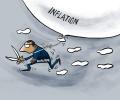
Most members of the Reserve Bank of India's monetary policy committee (MPC) decided to stick to the course on bringing retail inflation to the target of 4 per cent while voting for maintaining status quo in the April review, except external member Jayanth Varma who voted for a 25 bps cut in the repo rate. "I believe that the extant monetary policy setting is well positioned," RBI governor Shaktikanta Das said in the minutes of the policy review, which came out on Friday. "Monetary policy transmission is continuing and inflation expectations of households are also getting further anchored.

The RBI is fully aware that the high-cost loans and high indebtedness of the borrowers could pose financial stability risks, if not addressed by these NBFCs. Governor Shaktikanta Das has issued a stern warning, saying the RBI is closely monitoring these areas and will not hesitate to take appropriate action, if necessary, if the culprits don't opt for self-correction. Watch out for some action, soon, notes Tamal Bandyopadhyay.

Reversal in the declining economic growth trajectory is clearly the need of the hour and all steps should be taken to bring about this change.

Moody's Investors Service on Friday raised India's growth projection for 2023 calendar year to 6.7 per cent on account of robust economic momentum. "Strong services expansion and capital expenditures propelled India's 7.8 per cent real GDP growth in the second (April-June) quarter from a year ago. "We have accordingly raised our 2023 calendar year growth forecast for India from 5.5 per cent to 6.7 per cent," Moody's said in its Global Macro Outlook. - el nino

Equity benchmark Nifty scaled the psychological milestone of 21,000 in afternoon trade on Friday, and the Sensex touched its all-time intraday high of 69,888.33 after the central bank's decision to keep policy rates unchanged in line with market expectations. The 50-share benchmark index opened on a bullish note, after taking a breather on Thursday, and rose to 21,006.10. As many as 25 stocks were trading in the green, and 24 stocks defied the broader market and were trading in the negative territory.
The Reserve bank of India has just increased its repo rate and CRR and there are chances that banks may soon increase the interest rates on home loans.
The Reserve Bank of India on Tuesday kept the bank rate untouched at six per cent but raised the repo rate by 0.25 per cent to 4.75 per cent effective from Wednesday.

However, some analysts say RBI Governor Raghuram Rajan may delay the rate cuts amid mounting concerns over the government's fiscal health.

These are the highlights of the seventh bi-monthly monetary policy statement for 2019-20 by the RBI amid COVID-19 pandemic:
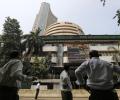
The broader 50-issue NSE Nifty too slipped from its record high, shedding 10.30 points or 0.09 per cent to end at 11,346.20.

RBI Governor Raghuram Rajan expressed anguish at the banks' reluctance to pass on benefits of the earlier rate cuts.

Most banks are yet to pass on the benefits to the consumers.

Corporate houses believe RBI must cut rates to boost investment in the system.

Finance Minister Nirmala Sitharaman has said the recent interest rate hike by the Reserve Bank was not surprising for her but the timing was, asserting that the rising cost of funds will not impact the government's planned infrastructure investments. For the first time since August 2018, RBI had on May 4 delivered a blunt 40 basis points increase in key repo rate to 4.40 per cent, and also hiked the cash reserve ratio by 50 basis points to 4.5 per cent after an unscheduled meeting of the rate setting panel, citing increased inflation pressures following the Ukraine war and the resultant spike in crude oil prices. Retail inflation printed at 6.9 per cent in March and the April reading is forecast to top 7.7 per cent.

Many officials had been talking of taking the baton of global growth.

The Reserve Bank of India (RBI) is expected to keep policy rates unchanged at a six-weekly rate review on Tuesday, ending a year-long cutting cycle as it focuses instead on underpinning the plunging currency.

'The FY2023 inflation outcome is likely to exceed the RBI's current forecast by a wide margin.'

'FDs should hold your emergency funds, equivalent to around 6-12 times your monthly expenses.'
The most recent RBI effort could be the final push that would allow enough and more room for banks, builders and buyers to start moving towards change.

In the Sensex pack, Sun Pharma was the biggest gainer, rallying 4.48 per cent, followed by Bajaj Auto, Tata Motors, Coal India, Hero MotoCorp, Maruti and HCL Tech, rising up to 3.01 per cent. While, RIL, PowerGrid, HDFC, L&T, IndusInd Bank, NTPC and Bajaj Finance declined up to 1.50 per cent.

High rates of such schemes deter banks from dropping borrowing rates - and thus lending rates

The real estate market has seen a decline in affordability due to the recent rise in median loan rates as a result of the 50 basis points (bps) hike in repo rates by the Reserve Bank of India (RBI). A cumulative increase of 0.95 per cent in median home loan rate has impacted the purchase affordability and purchase decisions of homebuyers, according to the Affordability Index by Knight Frank. The Affordability Index tracks the EMI (equated-monthly instalment) to income ratio for an average household.

RBI Governor Raghuram Rajan on Tuesday kept the repo rate unchanged 6.50 per cent.

Among the Sensex firms, ITC, Kotak Mahindra Bank, ICICI Bank, Nestle, Axis Bank, IndusInd Bank, UltraTech Cement, Bajaj Finance, Maruti and HDFC Bank were the major laggards.
However, RBI would continue to nudge banks to cut lending rates

The fifth meeting of Monetary Policy Committee maintained the repo rate, at which it lends to the banks, at 6.25 per cent and the reverse repo, at which it borrows, will be 6 per cent.

The RBI has this year cut interest rates by 110 basis points in four instalments but banks have passed only a part of it to borrowers. Before the last reduction earlier this month of 35 basis points, the bank on an average had passed only 29 basis points out of 75 basis points cut affected during 2019.
